Small businesses handle an enormous volume of sensitive information every single day. From employee payroll records and client contracts to tax filings and financial statements, the paper trail that keeps a business running can also become a serious liability if it is not properly managed.
Many small business owners assume that data breaches and identity theft are problems that only affect large corporations, but the reality tells a very different story. Criminals frequently target small businesses precisely because they tend to have weaker security practices in place. One of the most overlooked vulnerabilities is improper document disposal, and addressing it starts with understanding why secure document destruction matters in the first place.
Why Small Businesses Are at Risk
The misconception that small businesses fly under the radar of fraudsters and identity thieves is a dangerous one. According to numerous cybersecurity and fraud reports, small and mid-sized businesses account for a disproportionately large share of data breaches relative to their size. Physical documents are often the weakest link in a company’s security chain. A single discarded invoice, a carelessly tossed personnel file, or an old customer application pulled from an unsecured recycling bin can give a bad actor everything they need to commit fraud, file false tax returns, or steal someone’s identity.
This is not just a theoretical concern. Dumpster diving, the practice of going through a business’s trash to retrieve sensitive documents, remains a surprisingly common and effective tactic used by thieves. Unlike digital attacks, it requires no sophisticated technology and leaves very little traceable evidence. For a small business that lacks a formal document disposal policy, the exposure can be significant. Implementing confidential shredding services is one of the most straightforward and cost-effective ways to close this vulnerability before it becomes a costly incident.
Understanding Legal Compliance Requirements
Beyond the ethical responsibility to protect customer and employee information, small businesses are also subject to a range of federal and state regulations governing how sensitive data must be handled and disposed of. Failing to comply with these laws can result in steep fines, civil liability, and serious reputational damage.
Several key regulations apply directly to small business document destruction. The Health Insurance Portability and Accountability Act (HIPAA) requires businesses in the healthcare space to properly destroy any documents containing protected health information. The Gramm-Leach-Bliley Act (GLBA) mandates that financial institutions, including many small lending and insurance businesses, implement safeguards for disposing of customer financial records. The Fair and Accurate Credit Transactions Act (FACTA) requires any business that uses consumer credit information to take reasonable measures to protect that data when disposing of it, which explicitly includes physical shredding.
Small business compliance with these regulations is not optional, and ignorance of the law does not provide protection from its consequences. Establishing a documented, consistent process for business document destruction is a foundational step toward meeting these legal obligations and demonstrating due diligence in the event of an audit or legal dispute.
Choosing the Right Confidential Shredding Services
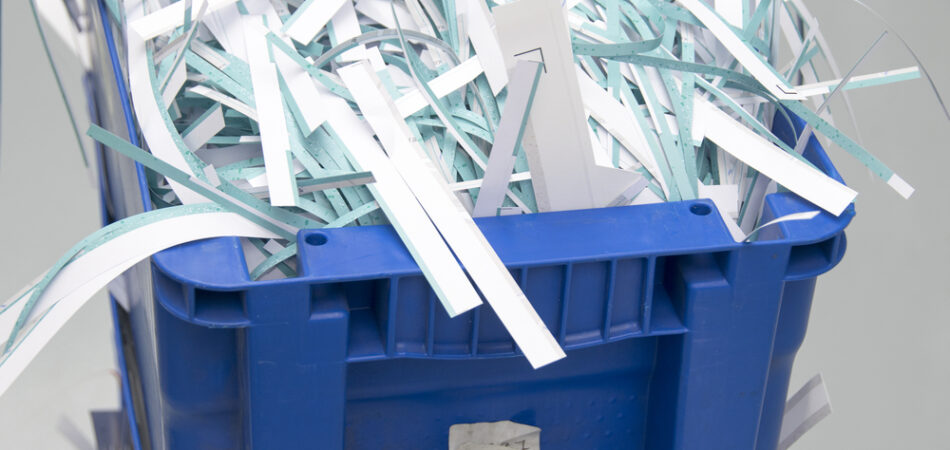
Not all shredding solutions are created equal, and small business owners should take time to evaluate their options carefully. A basic office shredder might seem like a sufficient solution, but strip-cut shredders, in particular, do not provide adequate security because the resulting strips can sometimes be reassembled. Cross-cut and micro-cut shredders offer greater security, but even these have limitations when dealing with large volumes of documents on a regular basis.
Professional confidential shredding services offer a more robust and reliable alternative. These providers typically offer on-site shredding, where a certified technician brings a shredding truck directly to your business location and destroys documents in your presence, or off-site shredding, where sealed, locked containers are transported to a secure facility. Both options generally come with a certificate of destruction, which serves as legal documentation that the materials were properly destroyed. This certificate is particularly valuable for businesses subject to regulatory oversight.
When evaluating a provider, small business owners should look for companies that are certified by the National Association for Information Destruction (NAID), now known as i-SIGMIA. Certification indicates that the provider meets rigorous standards for security, employee screening, and destruction processes. Price is obviously a consideration, but it should not be the only one. The cost of a data breach or regulatory fine far outweighs the modest investment in a reputable shredding service.
Some providers also offer scheduled recurring service, which can be a practical solution for businesses that generate a consistent volume of sensitive documents. Rather than allowing documents to accumulate, which creates its own security risk, a scheduled pickup ensures that materials are destroyed on a regular and predictable basis.
Building a Document Retention and Destruction Policy
One of the most valuable steps a small business can take is developing a formal document retention and destruction policy. This policy should define what types of documents the business generates, how long each category of document must be retained according to legal and operational requirements, and what process will be used to destroy them once the retention period expires.
Different documents have different retention requirements. Tax records, for example, are generally recommended to be kept for a minimum of seven years. Employee records may need to be retained for several years after an individual leaves the company, depending on applicable labor laws. Contracts and legal agreements often need to be kept for the duration of the agreement plus a defined period afterward. A clearly written policy removes ambiguity and ensures that everyone in the organization understands their responsibilities.
Training employees is an equally important component of this process. Staff members should know which documents are considered sensitive, how to store them securely while they are in use, and what to do with them when they are no longer needed. Even the most well-designed policy is only effective if the people responsible for carrying it out understand and follow it consistently.
Integrating business document destruction into the company culture does not have to be burdensome. With clear guidelines, the right service partner, and periodic reminders or training sessions, secure document disposal can become a routine and unremarkable part of day-to-day operations.
The Broader Benefits of Secure Document Destruction
Protecting sensitive information through proper destruction is not just about avoiding legal penalties or preventing fraud. It also sends a message to customers, employees, and partners that your business takes privacy seriously. In an era where data privacy has become a major concern for consumers, demonstrating responsible information management can be a genuine competitive advantage.
Clients who entrust your business with their personal and financial information want assurance that it will be handled with care throughout its entire lifecycle, including at the point of disposal. A business that can point to a clear, documented destruction policy backed by a certified shredding provider is in a much stronger position to earn and maintain that trust.
There are also practical operational benefits. A disciplined approach to document management and destruction reduces clutter, improves office organization, and can even free up storage space. When employees know that outdated documents will be regularly and securely destroyed, there is less temptation to let sensitive materials pile up in filing cabinets or storage rooms where they become difficult to manage and monitor.
Small business compliance with privacy and data destruction standards also helps prepare a company for growth. As a business scales and takes on more clients, employees, and regulatory obligations, having foundational policies already in place makes it significantly easier to maintain standards without scrambling to catch up.
Conclusion
Secure document destruction is a practical, affordable, and legally important priority for small businesses of every type and size. By partnering with reputable confidential shredding services, establishing a written retention and destruction policy, and training employees to follow consistent procedures, small business owners can protect their clients, their staff, and their own operations from the very real risks associated with improper document disposal. The investment is small. The protection it provides is substantial.