For many businesses and organizations in Finney County, Kansas, document management begins and ends with a shredder. When a file gets old enough, it goes into the bin. While secure destruction is certainly one piece of the puzzle, it represents only the final step of a much longer journey. The truth is that how a document is created, stored, shared, and eventually retired says a great deal about how well an organization operates.
Businesses and government offices across Garden City and the surrounding region are discovering that a more thoughtful approach to their records can reduce risk, save money, and keep them on the right side of compliance requirements.
Why Document Lifecycle Management Matters for Local Organizations
Effective document lifecycle management not only enhances operational efficiency but also ensures compliance with regulatory standards and optimizes resource utilization. For Finney County organizations, whether they are small agricultural businesses, healthcare providers, or county government offices, this matters enormously. Records touch every department, every transaction, and every interaction with clients or constituents.
Document lifecycle management brings order to each stage, defining how documents are created, reviewed, approved, used, and disposed of, with clear governance at every point. That kind of structure does not happen by accident. It requires intentional planning, and for many local organizations, partnering with a local data consultant is the most practical way to get there. A consultant who understands the regional landscape, including the industries, regulatory requirements, and operational rhythms unique to southwest Kansas, can help tailor a framework that actually gets used rather than one that sits on a shelf.
Without a well-defined document lifecycle, businesses expose themselves to compliance failures and misplaced documents which can set back all business initiatives. In a county where agriculture, meatpacking, and small business commerce drive the economy, disorganized records can translate directly into lost contracts, failed audits, or legal exposure.
From Creation to Disposal: Understanding the Full Spectrum
Most people think about document management only when something goes wrong. A missing contract, a misfiled tax record, or a data breach forces the conversation. But comprehensive record solutions are built to prevent those moments, not just respond to them.
The document lifecycle encompasses several stages, each requiring specific management strategies, beginning with creation, where it is crucial to determine the document’s purpose, intended audience, and the information it will contain, through editing and indexing for ease of retrieval, sharing and distribution with careful consideration of access rights and data security, and finally secure disposal practices for sensitive or confidential information.
Each of those stages presents an opportunity to either introduce risk or reduce it. For Finney County businesses that handle sensitive customer data, employee records, or financial information, gaps at any stage can be costly. Comprehensive record solutions address the entire chain, not just the parts that feel urgent in the moment. Document lifecycle management also provides a complete audit trail and lets organizations implement security measures at every juncture, which is particularly valuable for highly regulated industries like government and healthcare where compliance is an absolute necessity.
The Hidden Costs of Disorganized Records
It is tempting to assume that document management is an expense rather than an investment. In Finney County, where many organizations operate lean, adding a records management program can feel like an unnecessary overhead. But the numbers tell a different story.
According to a Box-commissioned Forrester Total Economic Impact study, enterprises using cloud-based solutions for document management achieved $14.5 million in end-user productivity savings, highlighting how automated content management drives measurable business value by reducing inefficiencies and speeding up operations. While that figure applies to large enterprises, the principle scales down meaningfully. Time spent searching for misfiled documents, recreating lost records, or responding to compliance inquiries is time not spent on core business activities.
Not being able to quickly retrieve information from document archival systems can result in a significant waste of time and resources and the possibility of missing key business insights. For a county clerk’s office managing property records, or a local law firm tracking client files, slow retrieval is not just inconvenient; it directly affects the quality of service delivered to the community.
A local data consultant who understands Finney County’s specific compliance environment, whether tied to Kansas state statutes, federal agricultural regulations, or healthcare privacy rules, can help organizations identify where their hidden costs actually live before designing a solution to address them.
Building Comprehensive Record Solutions That Work
The phrase “comprehensive record solutions” can sound abstract until it is broken down into concrete practices. For organizations in Finney County, building a system that works means accounting for physical records, digital files, and the workflows that connect them.
Effective lifecycle management means standardizing naming conventions, centralizing storage, enforcing role-based permissions, building change control into workflows, and using tools to enforce what has already been defined, which is the combination that keeps documents accurate, secure, and usable over time.
For documents arriving as scans or PDFs, optical character recognition and AI-driven intelligent document processing do the heavy lifting, extracting, indexing, and structuring content automatically so it is searchable from the outset and routes into the right workflow without anyone having to handle it manually. For a county like Finney, where many records still exist in paper form, digitization paired with smart indexing is often the first practical step toward a modern system.
Retention scheduling is another critical component. Establishing clear rules for how long teams should store files prevents unnecessary data buildup and supports compliance with internal and regulatory standards. Kansas state retention requirements apply to county government records, and private businesses face their own retention obligations depending on their industry. Working through those requirements with a knowledgeable local data consultant ensures that nothing is kept too long or discarded too soon, both of which carry real consequences.
Shredding in Context: Secure Disposal as Part of a Larger Strategy
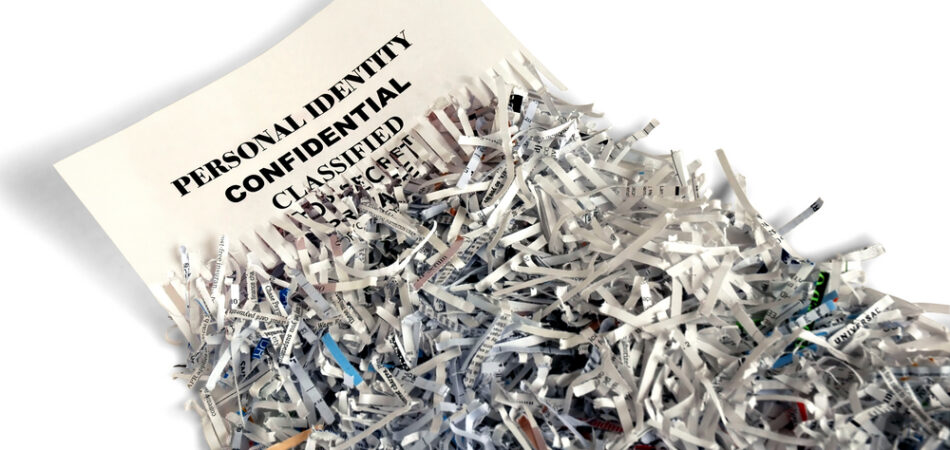
Shredding is not the enemy of good document management. It is, in fact, a necessary and important component of it. The problem arises when shredding is treated as a substitute for a broader strategy rather than the final step in one.
When documents reach the end of their lifecycle, organizations should ensure secure and compliant disposal practices, particularly for sensitive or confidential information, and establish clear policies for the destruction of physical documents through shredding or incineration, and secure deletion of digital files.
The key word in that guidance is “policy.” Shredding done on a schedule, according to a documented retention policy, with a certificate of destruction issued for sensitive materials, is a far more defensible practice than shredding done whenever a cabinet gets full. Finney County businesses that process personally identifiable information, including financial records, medical files, or employee data, are subject to regulations that require demonstrable, consistent destruction practices.
Getting the disposal process wrong, either by keeping documents too long or disposing of them too soon, creates compliance exposure. Comprehensive record solutions close that gap by embedding disposal into a lifecycle framework rather than treating it as a one-off event.
Protecting Finney County’s Future Through Smarter Records Management
The path forward for Finney County organizations is not about adopting the most expensive technology or overhauling operations overnight. It is about recognizing that every document has a lifecycle, and every stage of that lifecycle deserves thoughtful management.
Document lifecycle management is a system that becomes more valuable as an organization grows, and keeping it practical through standardized processes and centralized tools is what makes it sustainable long-term. For a region experiencing steady growth in agribusiness, healthcare, and local commerce, building that foundation now means less disruption later.
Organizations in Garden City and across Finney County that invest in comprehensive record solutions today are positioning themselves for greater operational resilience, cleaner audits, and stronger community trust. Whether the starting point is a digital scanning project, a retention policy review, or a full document lifecycle management overhaul, working with a local data consultant who understands the regional context makes all the difference. The shredder still has a role to play; it just works best at the end of a well-designed system, not as a substitute for one.